

While PBM arrangements remain complex, the real question for organizations heading into 2026 is clear: How do you ensure your contracts are performing as promised?
Hear from Ethica Pharmacy Advisors as we break down what a pharmacy benefits audit really is and why it’s one of the most powerful tools employers need to take control of their pharmacy spend without compromising care.
“We find a comprehensive audit helps our clients better understand their contract and the Rx space because of the educational nature of the results.” –Connie Perry, PharmD, Chief Pharmacy Officer, Partner
Audit basics
The goal of a PBM audit is to verify that contractual discounts, fees and rebate guarantees meet the terms of the contract. With Rx spend representing a higher portion of overall healthcare costs, it is important that plan sponsors hold their PBMs accountable for meeting contractual obligations as it relates to financial guarantees and rebate pass-through.
Ethica audits 100% of prescription claim data, repricing and validating every claim against the PBM contract. The value of an audit goes beyond confirming compliance. It can identify opportunities for improvement, including evaluating the competitiveness of the current PBM contract, assessing potential adjustments to drug coverage, and determining whether the partnership still aligns with the organization’s goals.
The most common audit includes an assessment of discount guarantees, dispensing fees, and manufacturer rebates – often evaluated as an Rx Financial Validation Audit. Additionally, plan sponsors can audit their service level guarantees, drug coverage, clinical programs, and even plan design.
How often should PBM audits be conducted?
Ethica recommends auditing PBM contracts and financial terms annually, but at a minimum, once per contract term, which is typically 3 years.
Warning signs or quiet indicators

No previous audit – With enhanced scrutiny on PBMs and the growing focus on PBM reform, self‑funded plan sponsors who have never conducted an audit should make it a priority.

Performance trending off track – At Ethica, we track PBM contract performance in our quarterly dashboards and assess when a PBM may miss its contract guarantees. This is a prime indicator that an audit is needed.

Unexpected rebates or savings variability – Unexplained or significant differences between expected and actual results can indicate issues.

PBM transitions – Whether working with a new PBM or undergoing operational changes with the existing one, transitions are a strong reason to initiate a review.
Why details make a difference
- High-risk areas for PBM discrepancies
Rx pricing is incredibly complex. There are multiple pricing types, distribution channels, rebates and administrative fees, PMPM guarantees, and shared-savings arrangements. We see discrepancies across all of these components. - The cost of small inaccuracies over time
A plan design and drug coverage audit is a clear example of how small inaccuracies can compound. During an audit, we often find that drug exclusions are not coded correctly, resulting in the Plan covering medications that are clearly noted as excluded in the SPD. Without regular audits, these plan coverage errors can continue indefinitely without the Plan’s knowledge.
The risks of not auditing
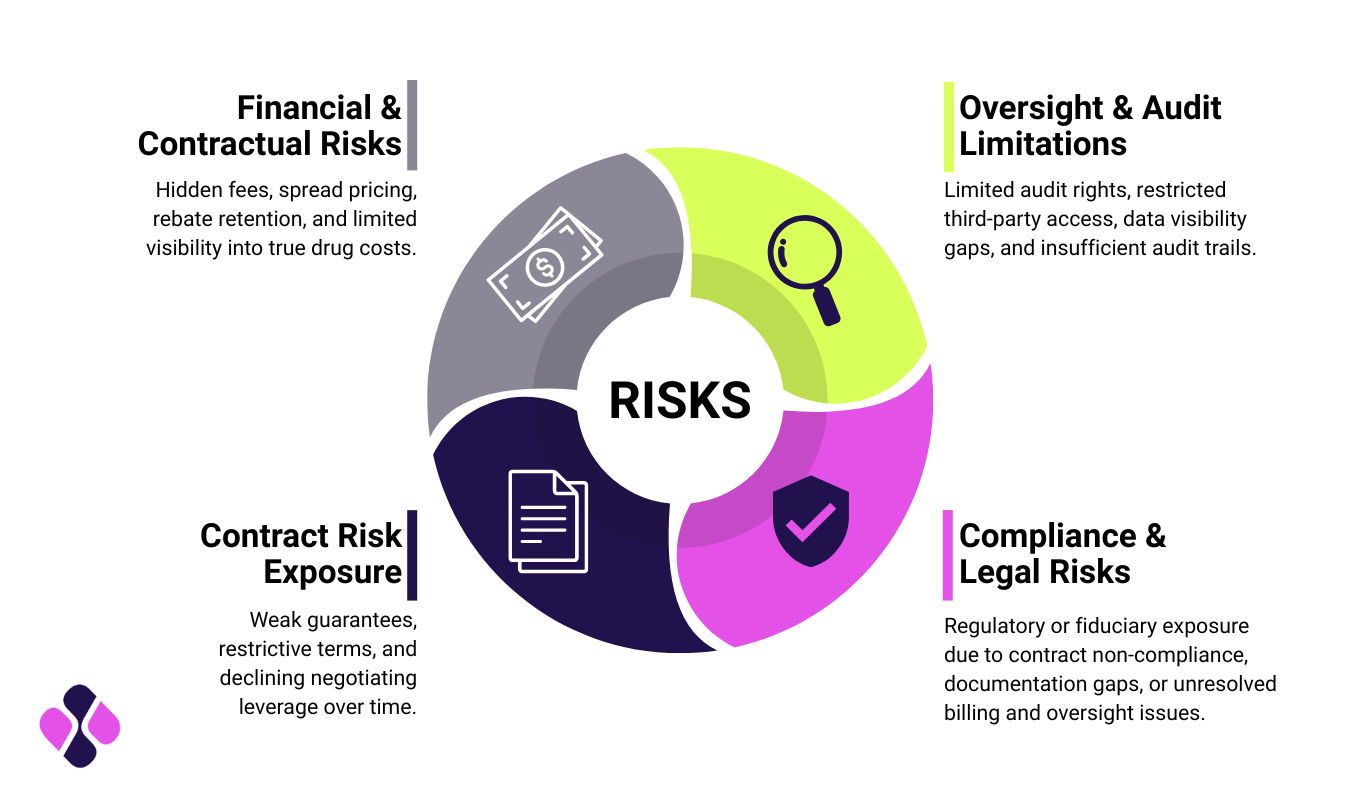
Note:
Organizations should engage independent experts to review PBM contracts for transparency requirements, pricing guarantees, audit rights, and performance metrics before signing. This verification process can save significant costs and protect against these various risks.
Why PBM audits matter
- Balancing savings & patient care
PBM audits support both cost control and patient access to medications by identifying recoveries from shortfalls on contract guarantees and uncovering instances where the PBM inappropriately covers excluded drugs. - How transparency supports better decision-making
By improving transparency, audits can serve not only as governance and due diligence on a large healthcare cost item but support positive changes across vendor selection, negotiations, plan coverage and performance guarantees.
Key Takeaways
Audits shouldn’t be reactive — they should be a standard component of PBM oversight.
Ethica Pharmacy Advisors provides independent auditing expertise to help organizations strengthen transparency, validate performance, and ensure their pharmacy benefits operate as intended. Reach out to Ethica to learn how a comprehensive audit can support your organization’s goals and guide your PBM strategy forward.